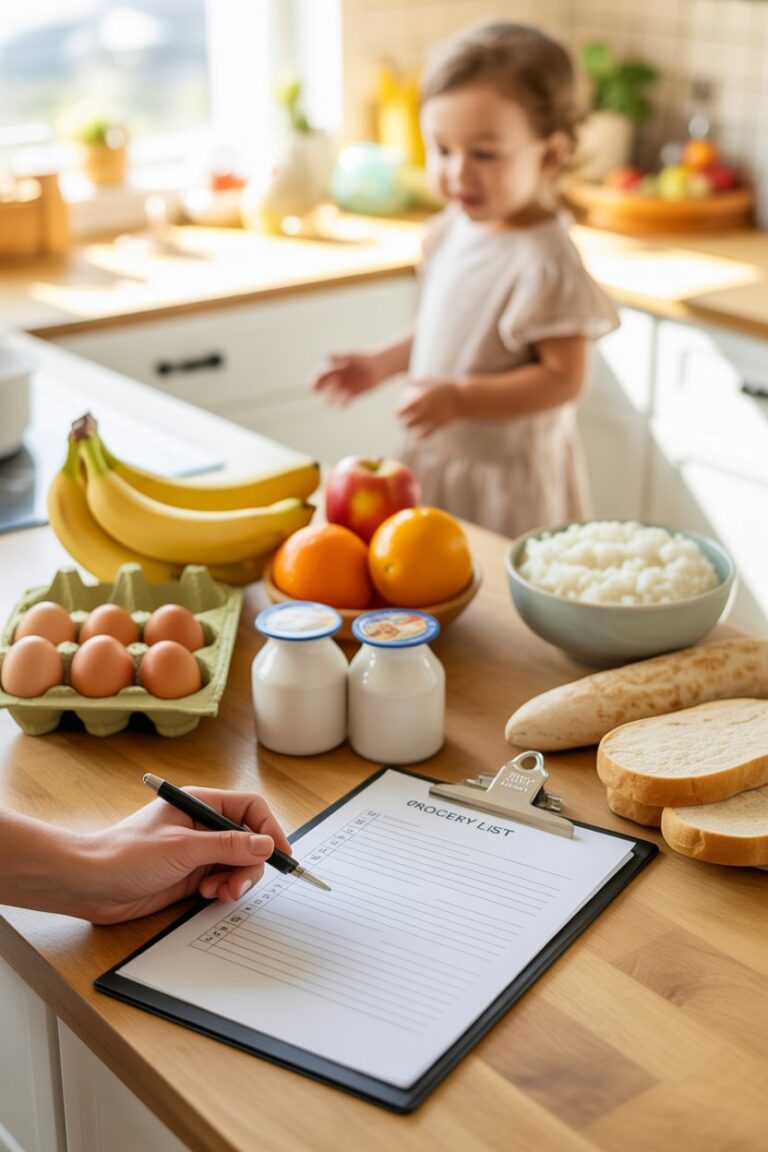
Truth is, the economy sucks for normal people like me. Groceries and gas are going up, rent increases and our income stays the same. We have to find sustainable ways to save some money while still eating good food. I also have to do so while managing a maniac i.e. a toddler in the grocery store. So don’t worry these tips are fool proof if you’re in the same boat.
Groceries Shouldn’t Feel This Hard
You don’t need a strict grocery budget to spend less.
You need groceries that actually turn into meals.
Most advice tells you to track every dollar, cut everything out, or follow a perfect plan—but that isn’t always realistic
This is what we actually do in our home to spend less on groceries—without overthinking every trip or calculating everything at the store.
If This Sounds Like You…
- You spend more than expected every grocery trip
- You still don’t feel like you have real meals
- Snacks disappear faster than anything else
- You buy food… but end up wasting some
- Budgeting hasn’t worked for you
- Your system has to work for you while you manage kids
In This Post You’ll Learn
- how to save money on groceries without budgeting
- the habits that actually lower your grocery bill
- how to make groceries last all week
- how to shop without overthinking everything
- how to reduce waste naturally
You can save money on groceries without budgeting by using simple habits like meal planning, buying mostly whole ingredients, planning snacks, shopping sales intentionally, and reviewing your receipts.
These 5 simple steps help you get a system set up before you even go into the grocery store, making your grocery store experience a little easier AND cheaper.
Why Groceries Feel So Expensive Right Now
By the time you get to the store, you’re already tired and your budget is already tight.
Your toddler is with you, dinner is coming up fast, and you’re trying to figure everything out in the moment.
So you end up:
- grabbing random items
- buying extra “just in case”
- forgetting what you already have
- and praying your toddler will stay in the cart….
And that’s where the extra spending happens.
Not because you’re doing anything wrong—but because there’s no simple system guiding your choices.
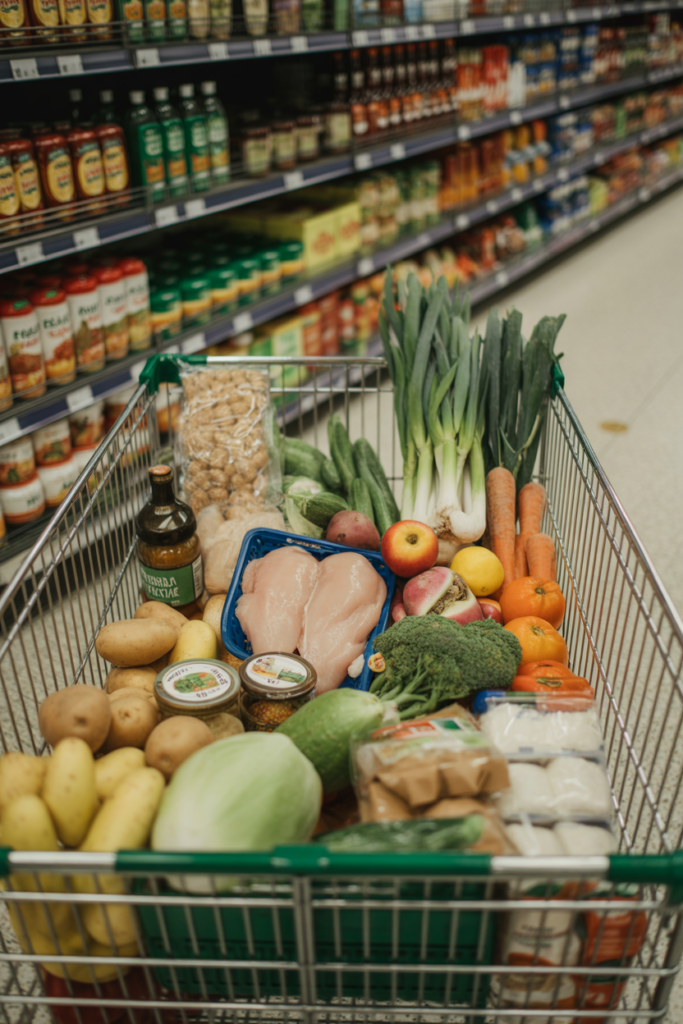
What Finally Changed in Our Home
I felt like we were running out of food each week, wasting food I didn’t even know we had and OVERSPENDING all the while. I tried calculating, tight budgeting, trying weird cheap meals, and none of it worked. None of it made my life easier and it definitely wasn’t sustainable.
So I cracked, threw everything out the window and tried focusing on the prep to go to the grocery store rather than the how to IN the grocery store.
The Simple Grocery System That Helped Us Spend Less
This is what we actually do in our home.
Instead of trying to spend less, we focused on using what we buy—and that changed everything.
1. Meal Plan (But Keep It Simple)
You don’t need a full plan—just direction.
Pick 4–5 dinners you know your family will eat.
Example:
- chicken + rice bowls
- ground beef skillet
- pasta + veggie night
This keeps you from buying random food that doesn’t turn into meals.
Related: Simple Meal Planning Guide for Busy Families (Gluten Free)
2. Buy Mostly Fresh + Whole Ingredients
Instead of filling your cart with:
- pre-packaged meals
- convenience foods
- extras you don’t fully use
Focus on:
- meat
- produce
- simple pantry staples
These ingredients stretch further and can be used in multiple meals.
This naturally reduces spending without needing to cut things out.
Related: The Gluten-Free Family Grocery List
3. Plan Snacks (So They Don’t Take Over)
Snacks are where money disappears fast.
Instead of grabbing random options, choose:
- 2–3 go-to toddler snacks
- 1–2 simple family options
Example:
- yogurt
- fruit
- crackers + cheese
When snacks are planned, you stop overspending on extras.
When snacks are planned, you stop overspending on extras
.Related:
4. Shop What’s on Sale (Within Your Plan)
Sales only help if you’re already planning to use the food. BUT before you leave for the store, shop your pantry, fridge and freezer to see what your already have!
Instead of buying random deals:
- check sales after you plan meals
- swap ingredients if needed
Example:
- chicken on sale → swap from beef
- you need fruit → you buy the fruit that is on sale
This lowers your total without adding extra food you won’t use.
5. Review Receipts (Quick Weekly Reset)
This takes 2 minutes but makes a big difference. I like to check the top 5-10 most expensive items and determine if we can make those things cheaper, remove them, cook them at home, shop in bulk etc… Any thing you can think of to reduce the cost of your most expensive items.
Ask yourself:
- what didn’t get used?
- what ran out fast?
- what did we overbuy?
This is how your grocery habits improve—without budgeting.
Why This Works
You’re not trying to control every dollar.
You’re making your groceries:
- easier to use
- more intentional
- less wasteful
What This Replaces
- strict grocery budgets
- tracking every dollar
- starting over every week
In Our Home…
In our home, the focus isn’t to spend less—instead it is to waste less and have a purpose behind each dollar spent.
The Grocery Habit System (Save This)
- Meal plan
- Buy whole ingredients
- Plan snacks
- Shop sales
- Review receipts
This is the system that keeps grocery shopping simple and helps everything get used.
Try This Before Your Next Grocery Trip
Write down:
- 3 dinners
- 2 snacks
+ The ingredients you’ll need to make those!
That alone will:
- reduce impulse buying
- make your cart more intentional
- lower your total
What Not To Do
- Don’t shop without a meal plan
- Don’t buy snacks randomly
- Don’t shop sales without a purpose
- Don’t overfill your cart “just in case”
- Don’t ignore what you already have at home
What Most Grocery Advice Gets Wrong
Most advice focuses on:
- strict budgets
- tracking everything
- cutting out foods
But moms don’t need more restriction.
They need fewer decisions and better systems.
The real shift is buying food that actually gets used.
If Meal Planning Is Where You Get Stuck…
Most moms don’t overspend because they lack discipline.
They overspend because they’re trying to figure out meals while shopping.
That’s exactly why I made my Simple Meal Plan Starter Kit.
It helps you:
- plan faster
- shop with intention
- stop starting over every week
FAQ
How can I save money on groceries without budgeting?
Focus on simple habits like meal planning, buying whole ingredients, and reducing waste. These naturally lower your grocery bill without tracking every dollar.
What is the biggest mistake when grocery shopping?
Shopping without a plan. This leads to overspending, duplicate purchases, and food waste.
How do I stop overspending on snacks?
Plan snacks ahead of time and stick to a small set of options instead of buying randomly.
Is meal planning really necessary?
Even a simple plan (3–5 meals) makes a big difference in reducing grocery costs.
Do grocery store sales actually help save money?
Yes—but only if you buy items you already planned to use.
Keep it Simple
- this doesn’t have to be complicated
- what changed in your home
- encouragement
- start small
- remind them this is doable