It’s a busy weeknight and you’re done.
Dinner isn’t planned, the pantry feels uninspiring, and you are not making another last-minute run to the grocery store.
You want something to lean on in these moments — not a plan, not a reset, just an option that works.
Culture tells us these nights are when you give in. Fast food. Frozen junk. Or the belief that feeding your kids well just isn’t realistic when life gets busy.
But in our home, we plan not to plan some nights.
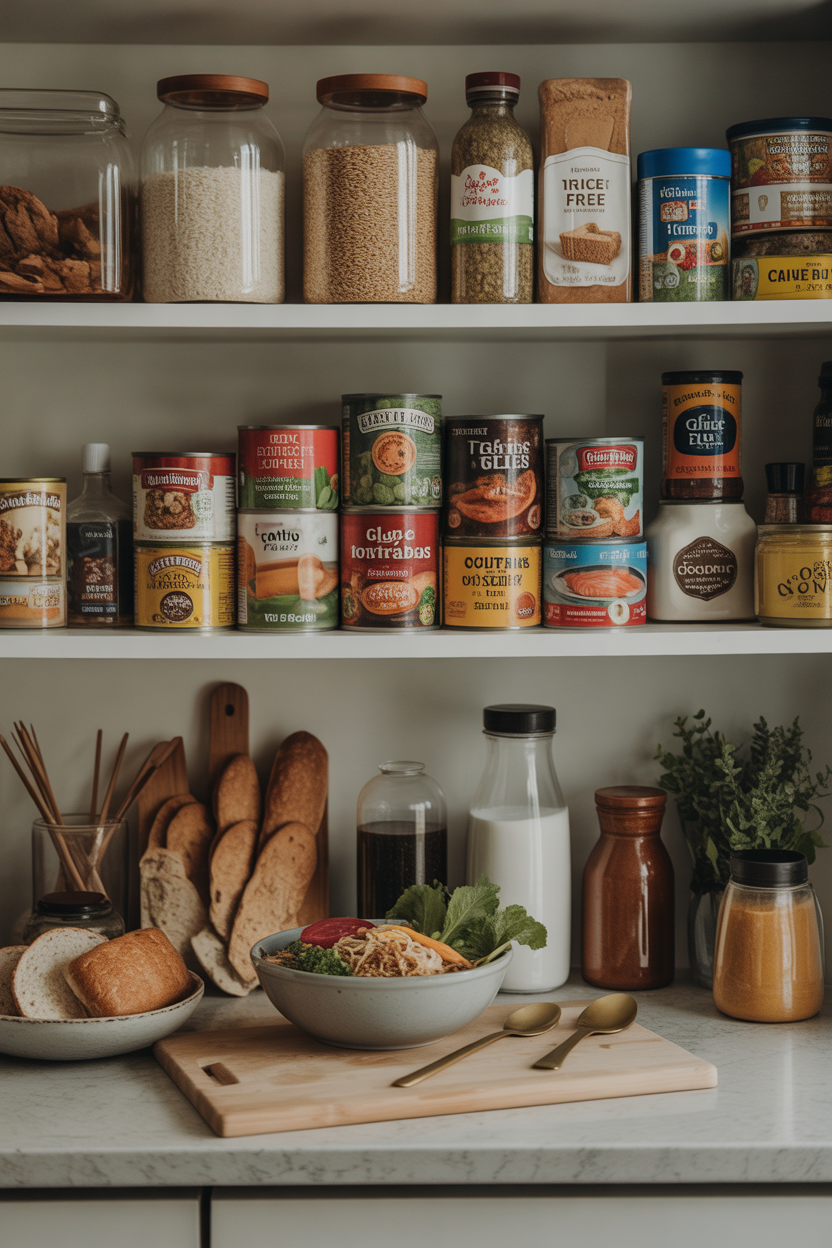
We build our pantry so it removes the guesswork, eliminates last-minute trips, and still gets a healthy, family-approved meal on the table.
In this post, I’ll walk you through building a simple arsenal of gluten-free pantry staples so you can pull together dinner on any given night — something easy, nourishing, and actually enjoyable — without starting from scratch.
This post is for you if:
– You’re gluten free and dinner still feels chaotic
– You want pantry dinners that actually work
– You’re tired of restarting every week or thinking every night
– You want calm evenings, not Pinterest perfect meals
Why Gluten-Free Families Struggle With Last-Minute Dinners
Being gluten free and feeding a family, negates the possibility of running to McDonald’s even if we wanted to and there is really no winging it. If your pantry isn’t stocking with good gluten free bases, meals just get harder and harder. We have to be on guard 24/7 when eating in the world, but at home we should get to relax, not think and just eat for once. All of those add up to a big problem and gluten free pantry staples is a real solution that works for me and my family for ALL my allergies and trust me I got a few… Wouldn’t it help to have a few dinners you don’t have to think about?
What Makes Gluten Free Pantry Staples Actually Useful
There’s a saying that some families by ingredients and other families buy food…. who came up with that never built a easy meal from pantry staples. In my home ingredient quickly turn into a good meal without much thought.
Our gluten free pantry staples help us build a dinner base that works for just about anything you’re in the mood for, satisfies those picky kids and learning toddlers, prevents store runs and supports your families health with wholesome food. Gluten free pantry staples are foods that consistently turn limited ingredients into complete meals without advance planning.
That’s why I spent a lot of time planning and testing what I really NEED in my pantry to make my life easier. You get to skip the work because I am spilling all my secrets.
Gluten Free Pantry Staples That Make Pantry Dinners Possible
Here it is: THE LIST. These are real things I fill my pantry with and make meals with all the time. I am able to make well balanced meals that my toddler eats, are quick and can be rotated all the time. PLUS pantry staple dinners are always cheap.
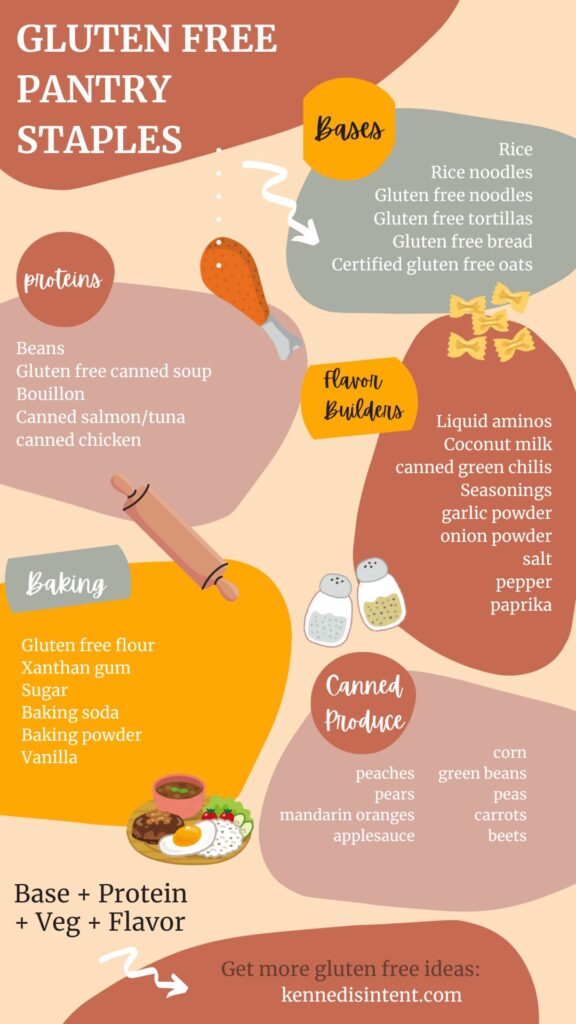
Save this list so you can come back to it on busy nights.
Dinner Bases (These are non-negotiable)
If you have these, you can almost always make a meal.
- Rice
- Rice noodles
- Gluten free noodles
- Gluten free tortillas
- Gluten free bread
- Certified gluten free oats
Easy Proteins & Meal Fillers
These keep pantry dinners filling and balanced.
- Beans
- Gluten free canned soup
- Bouillon
- Canned salmon/tuna
- canned chicken
Flavor Builders (This is what saves dinner)
One good flavor = dinner has direction.
- Liquid aminos
- Coconut milk
- canned green chilis
- Seasonings
- garlic powder
- onion powder
- salt
- pepper
- paprika
Baking & Thickening Basics
These help with quick breakfasts, swaps, and simple meals.
- Gluten free flour
- Xanthan gum
- Sugar
- Baking soda
- Baking powder
- Vanilla
Backup Produce
A cheap way to keep produce on hand without any spoilage.
- Canned vegetables
- corn
- green beans
- peas
- carrots
- beets
- Canned fruit
- peaches
- pears
- mandarin oranges
- applesauce
If you already have some of these, you’re closer than you think.
Pantry dinners work when the pieces work together, not when the pantry is full.
Save this list so you can come back to it on busy nights!
Related: The Gluten-Free Family Grocery List
The Simple Formula That Makes Pantry Dinners Work
Here’s what finally changed dinner for us:
It wasn’t more recipes.
It wasn’t better planning.
It was understanding that dinner only works when a few key pieces are already in place.
The idea is simple:
Base + Protein + Veg + Flavor = Dinner
That’s it.
But here’s the part most people miss.
Knowing this formula isn’t the same as being able to use it at 5pm.
A real example from our home
Let’s say it’s one of those nights where you didn’t plan ahead.
A spicy salmon bowl might sound like a “real recipe,” but it’s actually just pantry logic in action:
- Base: Rice
- Protein: Canned salmon
- Veg: Whatever vegetables you have on hand (fresh or canned)
- Flavor: Liquid aminos + spices
That’s dinner.
Not because it’s fancy — but because the pantry was stocked in a way that made this combination possible without thinking.
Related: Simple Meal Planning Guide for Busy Families (Gluten Free)
Want This Formula to Actually Work in Your Home?
The free pantry guide walks you through:
- How to organize your gluten free pantry staples by real dinners
- How to identify 2–3 pantry meals your family already likes
- How to restock so dinner keeps working — without starting over every week
It’s not a meal plan.
It’s a way to stop carrying dinner in your head.
What NOT to Do With Your Gluten-Free Pantry
A common habit is to find a list of recipes you like, shop for all the ingredients, and hope the week goes as planned.
I’ve done this — and every time I shop recipe-first, I spend more money and end up wasting food when life happens and those exact meals don’t get made.
What works better is planning around what you already have.
In our home, when meals start with the pantry (and the fridge), we:
- Actually use up what we buy
- Waste less food
- Spend less at the grocery store
Instead of buying ingredients for recipes, we choose recipes that use what’s already in our pantry and then add a few fresh items or extras to pair with our gluten free pantry staples.
Find recipes that fit your pantry — not the other way around.
Another thing to avoid is overstocking specialty gluten free items or foods your family doesn’t actually eat.
A pantry full of “good intentions” doesn’t help at dinnertime.
Your pantry should be an arsenal, not a wishing well.
A quick note for picky eaters
If picky eating makes shopping feel even harder — buying food you hope they’ll eat — that’s a separate layer of stress.
If you want help shopping for what your kids actually eat and what supports balanced meals, I put together a simple guide to walk you through that process.
Next Step: Build Gluten-Free Meals Without Overthinking
At this point, you know what actually matters in a gluten-free pantry.
You’ve seen the staples that make pantry dinners possible.
You’ve seen how meals come together when you have a base, a protein, a vegetable, and a flavor to work with.
The hard part isn’t understanding that.
The hard part is remembering it —
and using it consistently —
especially on the nights when you didn’t plan ahead.
That’s where most gluten-free dinners still fall apart.
Not because the pantry is wrong,
but because there’s no clear bridge between what you buy and how you turn it into meals.
What finally made this easier in our home was having two things clearly laid out:
- A grocery list that reflects what we actually use (not aspirational shopping)
- A simple meal builder that shows how those staples turn into repeatable dinners
So instead of standing in the pantry trying to think, we can just build a meal from what’s already there.
That’s exactly why I created the free grocery list + meal builder — to help you take the pantry staples from this post and turn them into dinners you can rely on, without starting over every week.
You don’t need new recipes.
You don’t need a stricter plan.
You need a clear list and a simple way to use it — especially when life gets busy.
Next week, I’ll show you how we turn these pantry staples into a simple family dinner routine that actually sticks.
Related: 10 Healthy Family Dinners on a Budget (Plus Allergen-Friendly Swaps!)
Building Gluten Free Pantry Staples That Support Real Life in 2026
Dinner gets easier when the pantry starts doing more of the work.
Not because it’s full —
but because it’s built with intention.
A strong pantry gives you options on the nights you’re tired.
It gives you confidence when plans fall apart.
It gives you a place to start when your brain feels done.
In our home, the pantry isn’t just storage.
It’s what allows us to make dinner without overthinking — because the pieces are already there, and they already work together.
That’s the power of a pantry that’s set up well.
It turns last-minute nights into normal nights.
It replaces pressure with rhythm.
It lets dinner happen without a reset every week.
If you want help turning the pantry staples from this post into something you can actually rely on, the free grocery list + meal builder is the next step.
It helps you see what to keep on hand, how those foods turn into real meals, and how to restock so dinner keeps working — without carrying it all in your head.
👉 Get the free grocery list + meal builder
Because when the pantry is strong, dinner doesn’t have to be.
FAQ
What are the most important gluten free pantry staples to start with?
The most important gluten free pantry staples are dinner bases — foods that can become a meal without much effort. Rice, rice noodles, gluten free tortillas, gluten free bread, and certified gluten free oats give you flexibility when plans fall apart.
From there, a few easy proteins, basic vegetables, and one or two flavor builders are usually enough to make dinner happen. A pantry doesn’t need to be full to be effective — it needs to be built around meals you can actually repeat.
How do I make last minute gluten free dinners without planning?
Last-minute gluten-free dinners work when the pantry already has what dinner needs.
Instead of thinking in recipes, it helps to think in pieces:
- A base
- A protein
- A vegetable
- A flavor
When those pieces are already in your pantry, dinner becomes about combining — not deciding. That’s why pantry structure matters more than meal planning when life is unpredictable.
What if my kids are picky eaters? Can pantry dinners still work?
Pantry dinners actually work better for picky eaters when they’re built around familiar foods.
Repeating meals your kids already accept creates consistency and reduces pressure. Instead of chasing new recipes, you’re refining what already works and keeping those foods available.
A strong pantry supports picky eaters by making familiar meals easier to repeat — not by forcing variety.