I spend about 30 minutes every week planning healthy beautiful meals and then spend hours shopping, cooking and not to mention spending our hard earned money only to have my one year old (depending on his mood), toss it on the ground without a second look… It feels… great.
I you feel the same ways that’s why you’re here. You want more for your money and your kids.
This printable healthy grocery list, helps you skip some of those time consuming, deflating moments I just mentioned and helps you better encourage your kiddos to eat something more than cheese and chicken nuggets.
We can’t always “fix” picky kids, but we can plan our groceries better so our purchase work with our kids not against them.
Table of Contents
Why Grocery Waste Is So Common With Picky Eaters
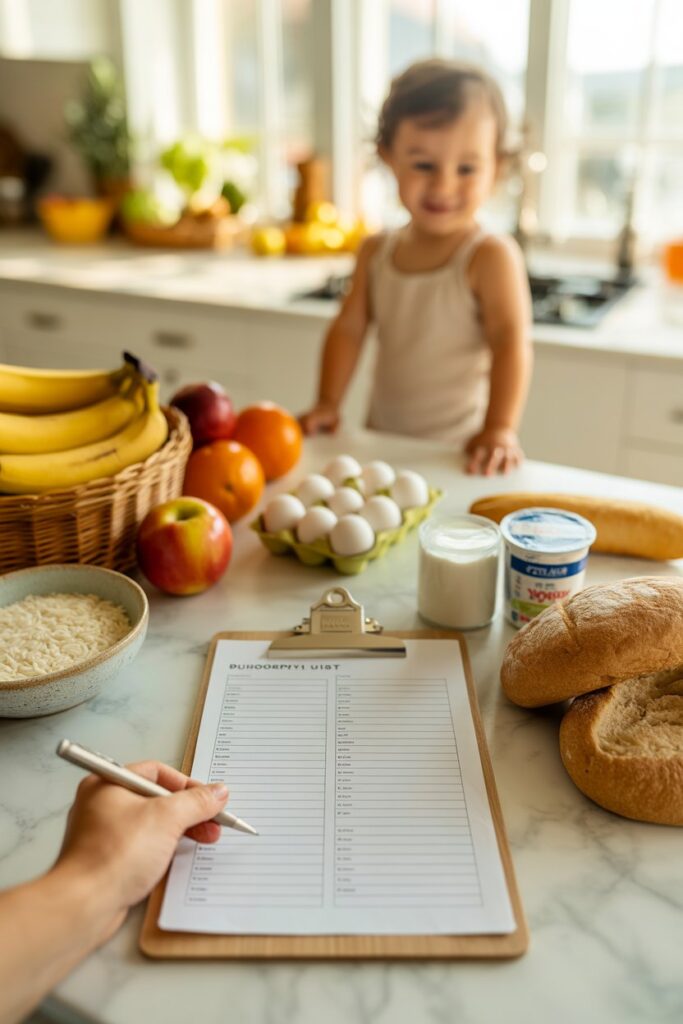
Kids will eat what kids will eat sometimes, and working against that is what causes so much wasted groceries in our homes. We might be shopping too much for meals we want them to eat rather meals that stretch and comfort them.
A well balanced grocery list for picky eaters should have foods they love and foods they can try. Studies have shown kids need at least 8-15 exposures to a food before you give up on it and should be paired with foods they like. So before you give up and throw the food away do you best to preserve it and keep trying.
The Mindset Shift That Changes Everything: What You Buy Is What They Learn to Eat
The reality is, what you buy consistently is what your kids become familiar with over time. If you never buy things for them to try, they won’t try new things. If it’s a habit to buy sugary processed foods, that’s what they’ll eat. A huge part to how you kids eat, is what you provide. Kids can’t learn to eat food that never show up.
It’s all about consistency. Involving your kids in shopping and picking out some new fruits or veggies to try can help involve them and begin their exposure.
Related: The Family Meal Time Routine That Makes Dinner Happen
Buy From All Food Groups — Without Buying Everything
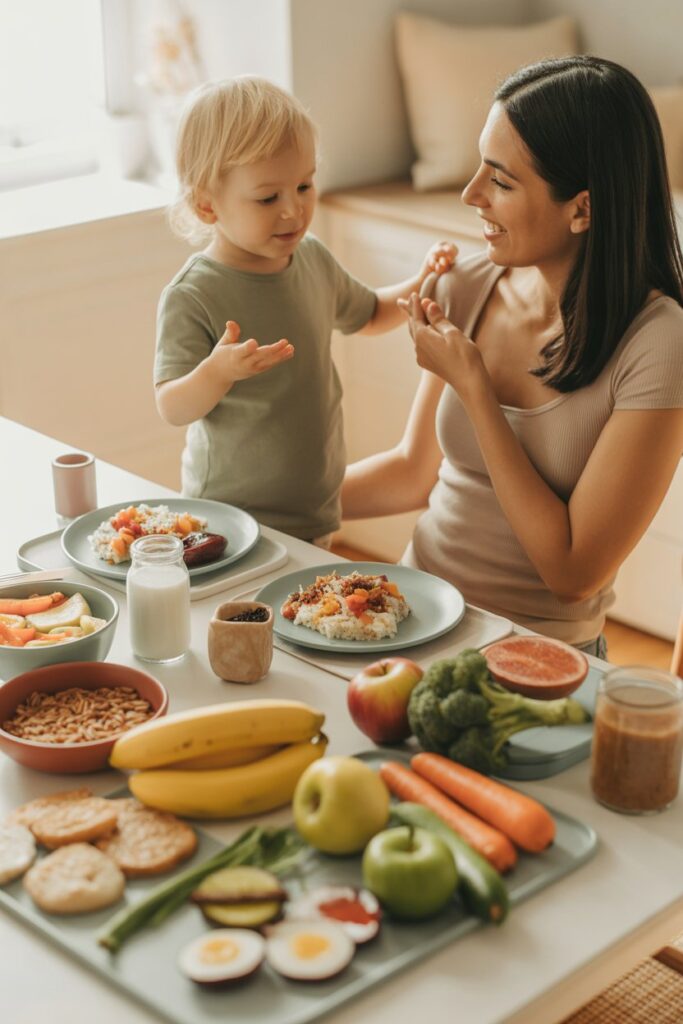
A simple way to increase exposure and ensure a healthy diet for the whole family, including your picky eater is to make sure you’re buying AT LEAST one thing from each food group.
This includes:
Fruit
Vegetables
Protein
Grains
Dairy
You don’t need to try multiple foods, each week, maybe just one or two from different food groups multiple times. Seeing food repeatedly can lower resistance from your little one. Kids don’t have to eat the food right away to benefit from it being present.
Related: Simple Meal Planning Guide for Busy Families (Gluten Free)
Why One Refusal Doesn’t Mean They Don’t Like It (The Exposure Piece)
A reminder that for a child to even consider accepting a food, it can take up to 8-15 exposures. So one rejection isn’t a failure, but a win. It was one exposure down. You can buy small amounts repeatedly to reduce waste as you make your way though all those exposures. This healthy grocery list for your picky eater I created does just that, encourages repetition and comfort.
The “Always-Yes + Try Foods” Grocery Method
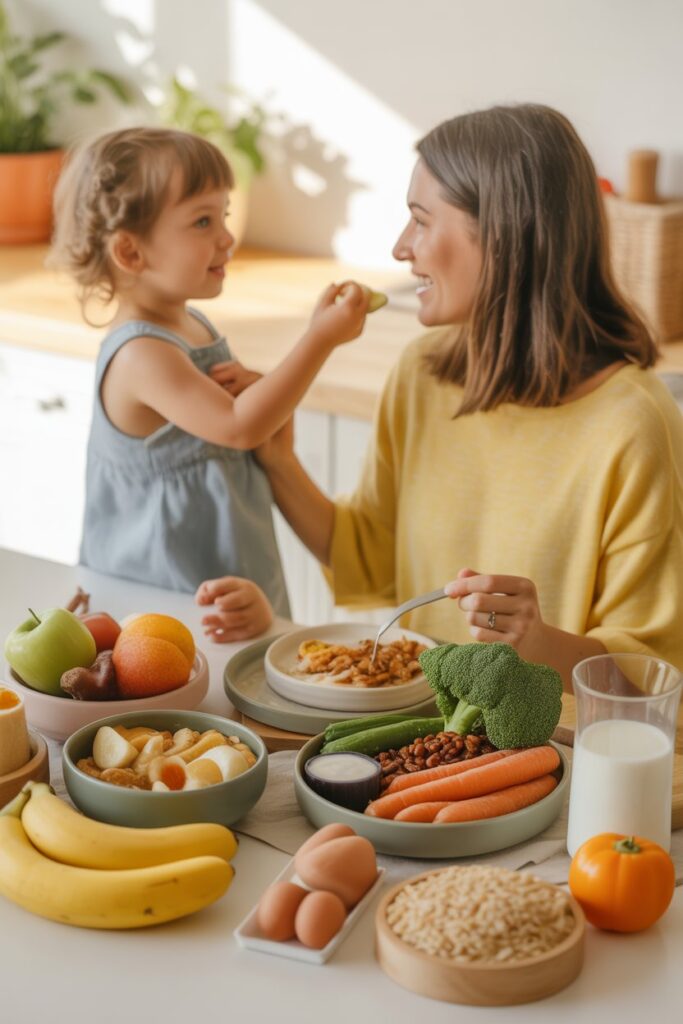
This method works in our home and is rooted in psychology.
Buy some of your child’s “always yes foods”. It’s important that they have foods they love and recognize on their plate and… let’s be real they’ll starve if we don’t buy those nuggets or cheese.
Buy some “try foods”. 1-2 foods per week from ANY food group in small amounts and serve them over and over with familiar foods.
It helps when the whole family eats the same meals and gets excited to try the new foods.
For some ideas of family meals to serve that are toddler or picky eater friendly, you might find this 7-day meal plan helpful!
Shelf-Stable and Flexible Foods That Reduce Waste
Shelf- stable foods are simple ways to buy foods that last longer so there is less waste when trying to feed your picky eater.
Shelf stable foods do mean they are not healthy! Canned fruits or vegetable (when chosen without added sugar or salt) are just as healthy and perfect for families on a budget.
My son prefers some fruits and veggies canned rather than fresh anyways.
Some examples of this might look like:
rice
oats
nut butters
pasta
frozen produce
canned produce
The healthy grocery list provides food prioritizes a range of shelf stable foods so you don’t have to worry about spoilage and money wasted.
Related: Gluten Free Pantry Staples for Easy Last-Minute Dinners
Simple Ways to Make Fruits and Vegetables Last Longer
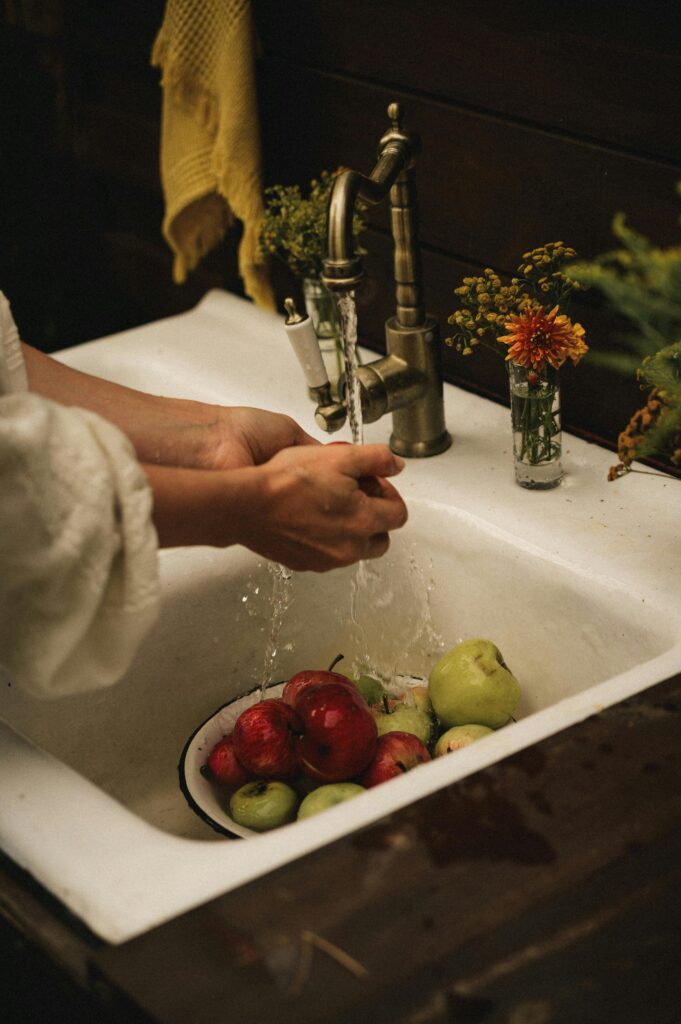
The way we store our produce has a huge affect on how long it lasts. I have found this guidance from EatingWell to work well for my family.
Store in the Fridge
These fruits and vegetables last longer when kept cold and dry.
- Apples (store away from other produce)
- Berries (unwashed, dry, in the fridge)
- Leafy greens (spinach, lettuce, mixed greens)
- Broccoli and cauliflower
- Bell peppers
- Carrots
- Cucumbers
Why this works: Cooler temperatures slow spoilage, and keeping produce dry prevents mold and slime.
Store on the Counter (or in a Cool, Dark Spot)
These do better at room temperature.
- Bananas
- Tomatoes
- Potatoes
- Onions
Important note:
- Keep bananas away from other fruits
- Store potatoes and onions separately
Why this works: Some produce releases ethylene gas, which can cause nearby fruits and vegetables to spoil faster.
Freeze Before It Goes Bad
When produce is getting soft or you know you won’t use it in time, freezing saves it.
- Soft berries (for smoothies)
- Overripe bananas (peeled)
- Chopped peppers, onions, or broccoli
- Spinach or greens for cooking
Keep Produce Dry (No Washing Until Use)
Moisture is one of the fastest ways produce goes bad.
- Don’t wash fruits and veggies until you’re ready to eat them
- Remove any moldy pieces immediately
- Use paper towels to absorb moisture in storage containers
- Keep produce visible so it doesn’t get forgotten
My storage isn’t perfect, but even a little tweak can help my produce last the whole week versus days. Saves me money and reduces some food waste.
Related: 25+ Unique School Lunch Ideas That Kids Will Actually Eat
How the Printable Healthy Grocery List Pulls This All Together
This printable healthy grocery list takes everything we’ve talked about and turns it into something you can actually use at the store. Instead of guessing what to buy or starting from scratch each week, the list helps you shop with your goals in mind— especially when you’re feeding picky eaters.
It’s designed to help you buy from all food groups without overbuying, so foods become familiar over time. It also makes it easier to balance foods they love and “try foods,” which is key for picky eaters and one of the most effective ways to stop wasting groceries.
Because the list encourages repetition, you’re able to repeat what works for your family instead of constantly rotating foods that don’t get eaten. That consistency naturally supports a healthy grocery list for families, lowers grocery bills, and reduces the guilt that often comes with throwing food away.
It’s a tool for consistency, not perfection — one that helps you feed your family with more confidence and a lot less waste.
FAQ: Grocery Shopping With Picky Eaters
How do I stop wasting groceries when my kids are picky eaters?
Focus your grocery list on foods your kids reliably eat, then add only one or two “try foods” at a time. Repeating small amounts of foods and planning meals that reuse ingredients reduces waste far more effectively than constantly buying new items.
Is it okay to buy the same foods every week?
Yes. Repetition builds familiarity, saves money, and increases the chance food will be eaten. Many families thrive on a small rotation of trusted foods.
Do kids really need multiple exposures to try new foods?
Yes. Many children need 8-15 exposures before they’re ready to try or rule out a food. Consistently buying and serving small amounts works better than giving up after one refusal.
Does this grocery list work for gluten-free families?
Yes. The list is ingredient-based and easy to adapt for gluten free meals using familiar staples your family already eats.
A Grocery List That Gets Eaten Creates a Calmer Home
This healthy grocery list is made to help you work with your picky eater and not against them. It’s the perfect example that we can try to expand our kids pallets, eat healthy and save some money all at the same time.
In our home we don’t settle for the idea that packaged processed foods are the only foods our kids will eat. We protect our bodies and our relationship with food by always trying new things at a kid safe pace and understanding, picky eating is just a part of development sometimes. Creating some familiarity and repeatability is a small way to create calmer rhythms and stronger homes,